
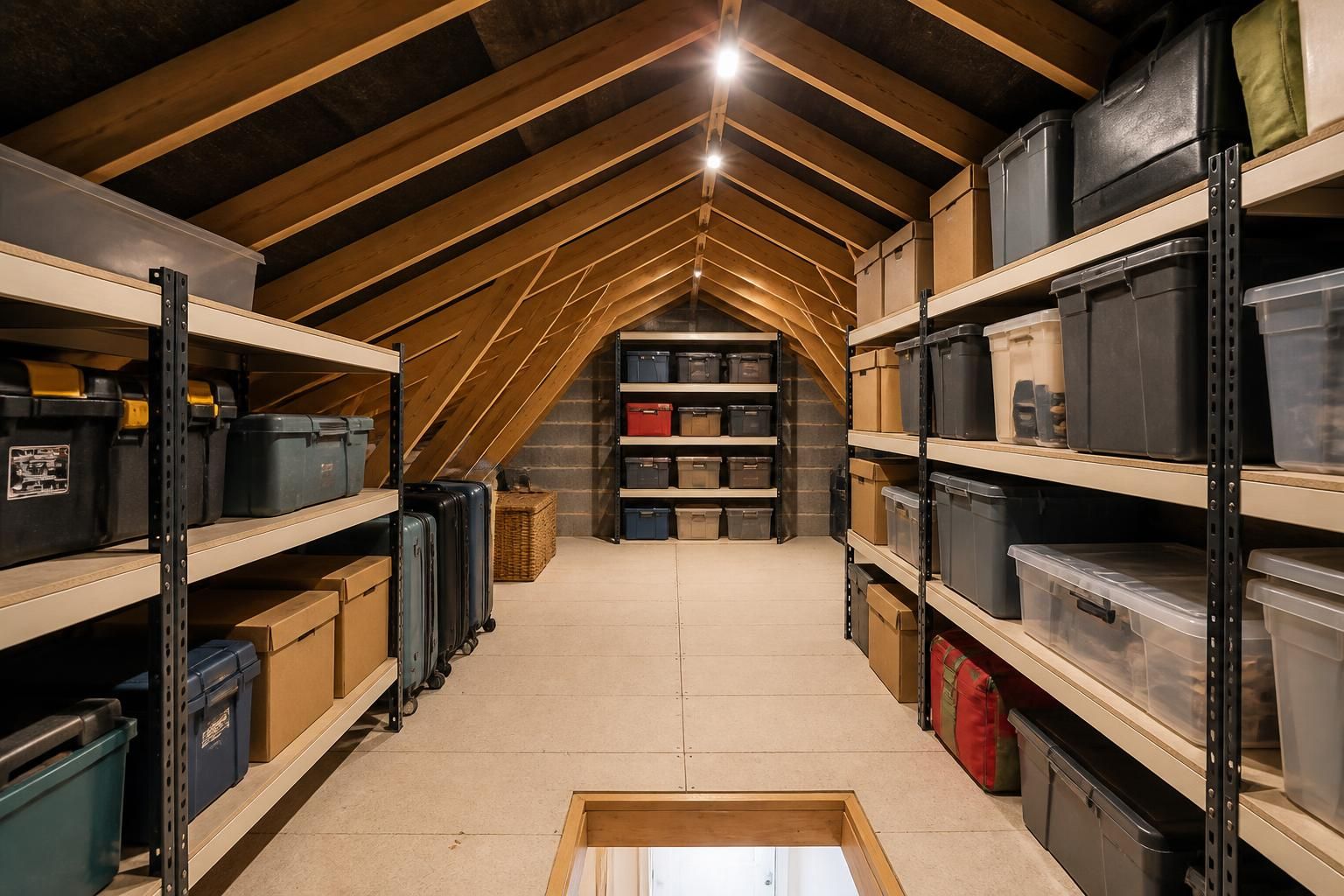
How can shelving make a loft easier to organise?
Shelving makes a loft easier to organise by separating boxes, seasonal items and everyday belongings into defined storage areas.
It uses vertical space, keeps items visible and leaves the boarded floor clearer for safe movement and access.
Shelving makes a loft easier to organise when it is planned around the items you store, the available headroom and the routes through the space. It gives each category a defined position, reduces repeated handling and helps you identify what needs to remain accessible.
Start by listing the belongings you expect to keep in the loft. Group similar items, such as decorations, suitcases, children’s possessions, archived paperwork and rarely used household equipment. This shows how much shelving you need and prevents a layout based only on the available wall area.
Place frequently handled items where you can reach them without stepping over stored belongings. Seasonal items can occupy less accessible positions when they are not needed. Keep heavier boxes at a comfortable lifting height, rather than placing them above shoulder level.
Shelving beside the access point can be useful for smaller items and regular retrieval. However, the area around a loft hatch or ladder must remain clear. You should be able to enter, turn and move safely without catching clothing or boxes on the shelves.
Loft shelving should also work with the roof shape. The sloping underside reduces height towards the eaves, so lower shelves may suit those areas better. Taller shelving belongs where the roof structure provides enough clearance for safe access.
Measure the proposed position before choosing a shelving arrangement. Check the available width, depth and height, including any roof timbers, pipes, cables, tanks or ventilation routes. A shelf that fits on paper may obstruct a service or make a hatch difficult to use.
Leave household services accessible for inspection and maintenance. Shelving should not block electrical equipment, water tanks, ventilation paths or other components that need future attention. A measured layout can reserve these areas instead of treating every part of the loft as storage.
Storage above insulation requires suitable raised flooring beneath the usable area. Standard loft insulation should not be compressed under boarding or shelving supports, because this can reduce its intended depth. LoftZone raised flooring creates storage above insulation while providing a stable base for a planned storage arrangement.
Fixings must suit the boarding system and the structure below it. We assess the proposed shelving position before installation, rather than relying on unsupported boards or attaching fittings wherever space appears available. The weight of the shelves and their contents also needs consideration.
Use containers that match the shelving dimensions. Consistent boxes usually stack more predictably than mixed bags and loose items. Labels on the front edge can identify contents without requiring you to remove every container from a shelf.
Keep a small amount of spare capacity in each section. Overfilled shelves make items harder to remove and encourage boxes to be stored in walkways. An organised loft needs room for handling, checking and rearranging belongings.
Lighting affects how useful shelving becomes. A light positioned near the access route may not illuminate the rear of deep shelves. Loft lighting should cover the areas where you retrieve items, while cables and fittings remain protected from accidental contact.
For a complete arrangement, Loftopia can combine shelving with raised flooring, an insulated drop-down hatch, aluminium sliding loft ladders or timber loft ladders. These elements address storage, access and movement as one planned installation.
Loft Storage & Accessories can be considered alongside the shelving layout when you need additional organisation. The appropriate arrangement depends on the loft’s dimensions, existing insulation, roof structure, access position and the belongings you intend to store.
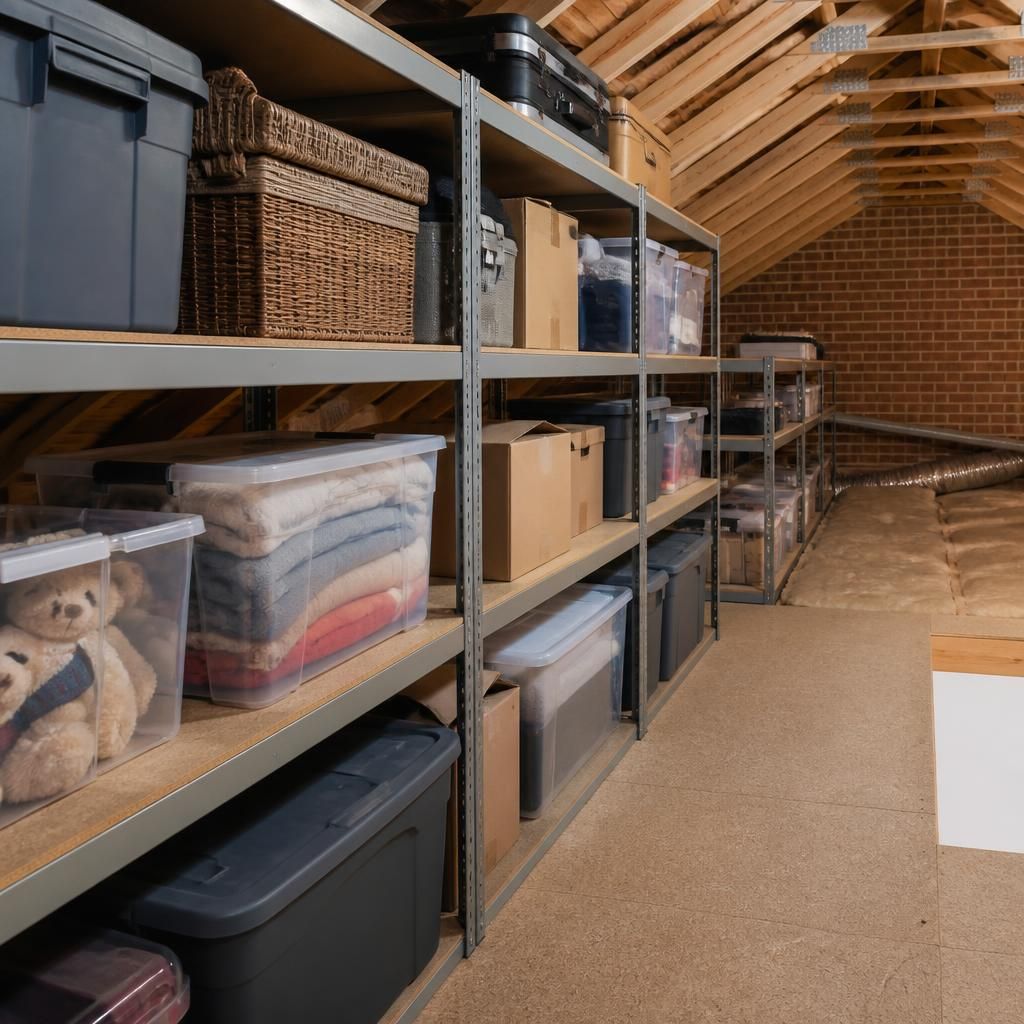
Shelving can separate fragile belongings from dense boxes, reducing pressure and instability caused by loose floor-level stacks. Use rigid containers for delicate items and place heavier storage on lower shelves.
Open shelves also make categories easier to review during an occasional clear-out. You can identify damaged containers, remove belongings no longer needed and keep each section assigned to a specific type of storage.