
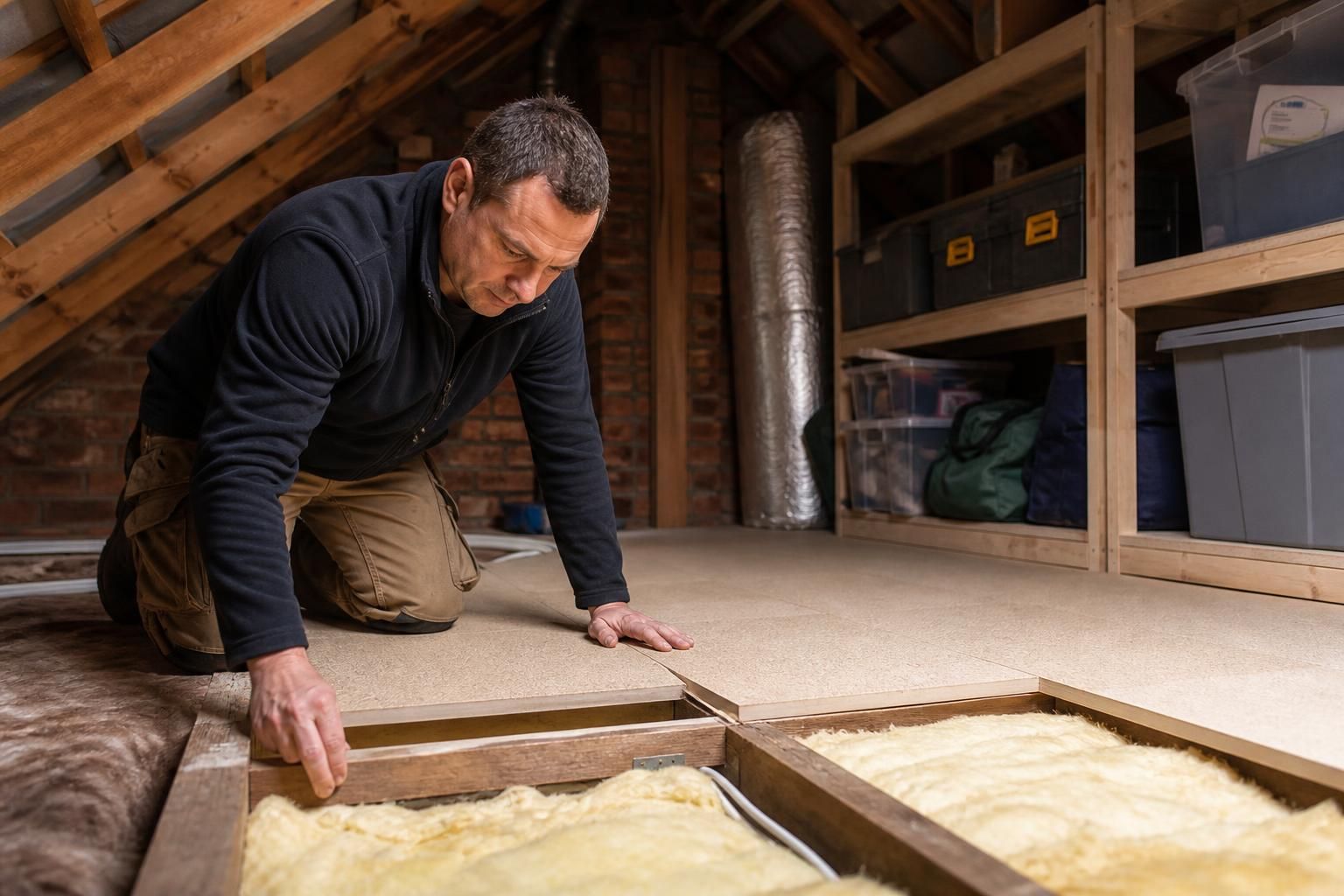
What should you check before fixing storage to a loft floor?
Before fixing storage to a loft floor, check the joists, floor construction, insulation depth, access route and any cables or household services nearby. Confirm that the combined storage weight remains suitable for the flooring, rather than fixing into insulation or relying on unsupported boarding.
Before fixing storage to a loft floor, confirm that the flooring and storage unit can accept fixings without reducing stability or restricting future access. A freestanding unit may be more suitable where the deck, structure or services cannot be disturbed.
Start by checking the storage design. Tall shelving and cupboards need protection against movement, while low containers may not need permanent fixing. Consider how the unit will be carried through the hatch and positioned without damaging the flooring or nearby insulation.
- Check the fixing instructions supplied with the storage unit.
- Choose fixings suitable for the flooring material and the unit’s construction.
- Use enough fixing points to prevent rocking, twisting or tipping.
- Keep fixings clear of flooring edges, joints and removable access panels.
- Do not drill until you know what lies beneath the proposed fixing point.
Raised flooring changes the fixing detail. LoftZone raised flooring provides storage above insulation, but the deck should not automatically be treated like a solid structural floor. The fixing method must suit the installed system and avoid damaging its components.
Storage should sit evenly on the floor, with no rocking feet or unsupported corners. Concentrated weight can affect the flooring differently from several smaller items spread across the available area. Keep heavier belongings low and distribute contents between shelves.
Check that doors, drawers and boxes can open without blocking the route across the loft. Leave access to areas that may need inspection, maintenance or future adjustment. Fixed storage should not turn an otherwise usable walkway into a narrow passage.
Drilling can damage hidden components, insulation or the flooring system. If you cannot identify a safe fixing point, stop rather than testing the deck with a longer screw or stronger anchor. A loft specialist can assess the proposed position and recommend a suitable attachment method.
Loftopia can review storage requirements alongside raised flooring and Loft Storage & Accessories. We can help you decide where fixed shelving is appropriate and where movable storage would preserve access and flexibility.
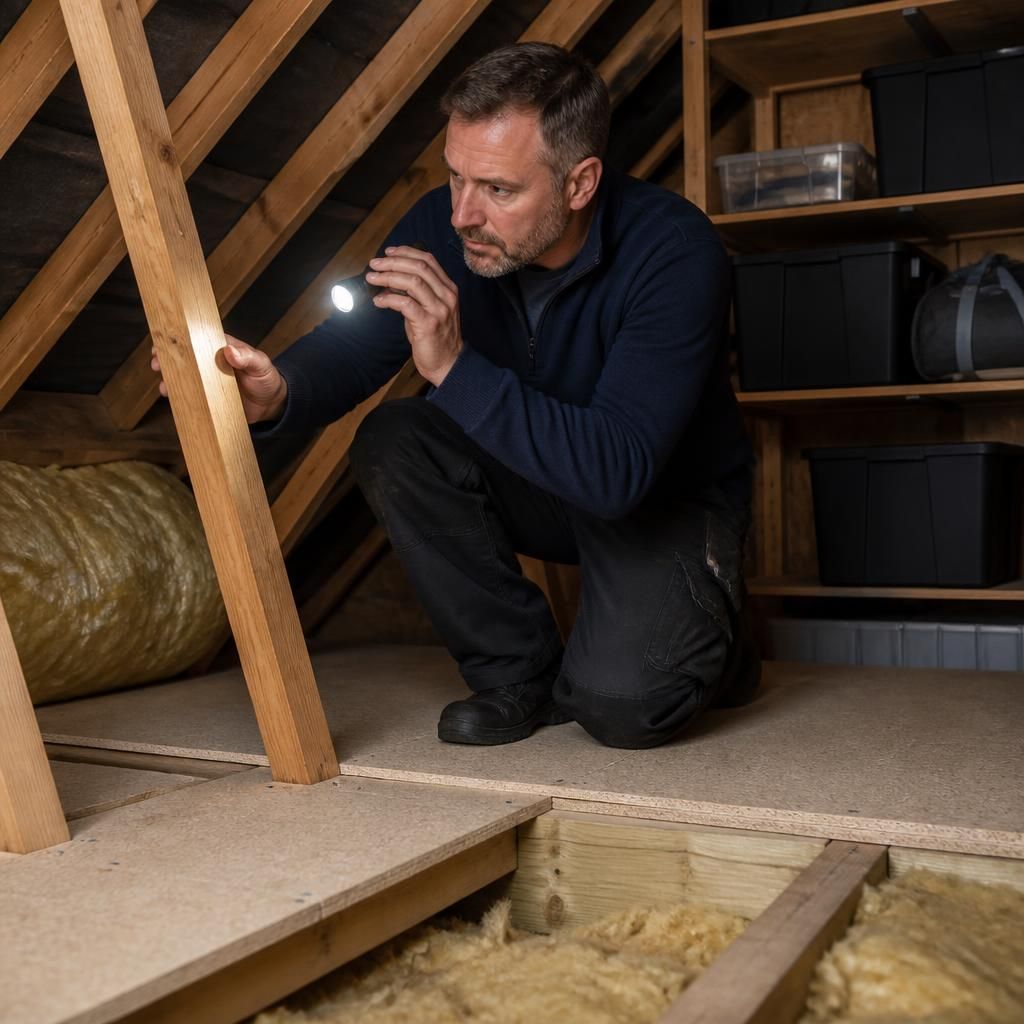
Check for water staining, damp smells, mould or damaged timber before fixing storage permanently. Resolve any roof or ventilation problems first, so the unit does not conceal defects.
- Inspect accessible flooring for movement, rot or cracked boards.
- Look beneath the proposed storage position for staining or signs of past leaks.
- Keep inspection points visible where repairs may be needed later.
- Choose movable storage if the area remains vulnerable to damp or requires regular checking.
Fixed storage can make defects harder to see and repairs more difficult. A sound, dry loft floor provides a more suitable base for organising stored belongings.