
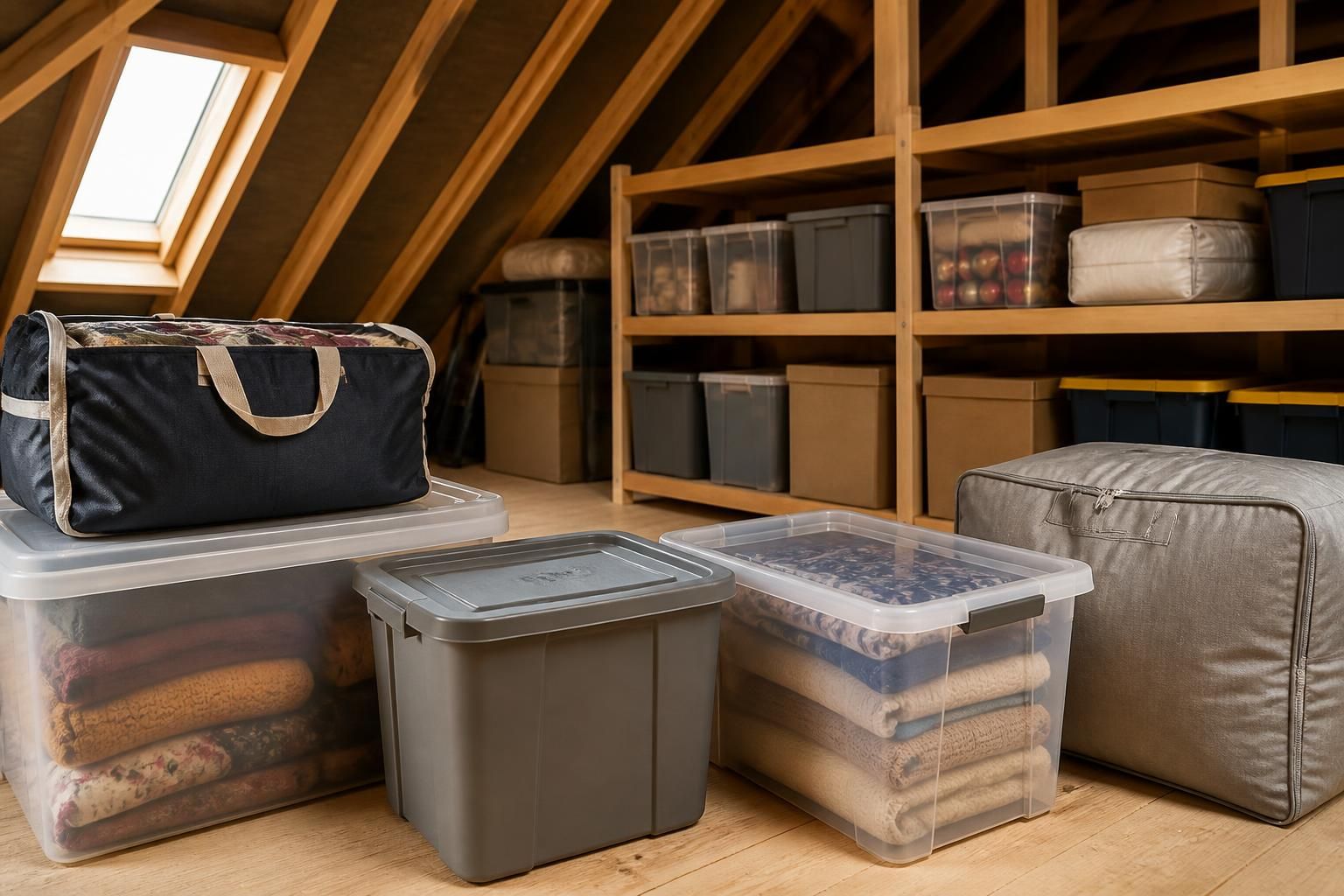
Which storage containers work best in a loft?
The best loft storage containers are lidded, durable boxes or tubs that protect belongings from dust and make stacking straightforward. Use clear or labelled containers for items you access regularly, and soft storage bags for compressible textiles where the loft remains dry and accessible.
Rigid plastic tubs usually suit loft storage best because they resist occasional knocks and keep their shape when moved. Choose each container according to the item, the loft conditions and how often you need to handle it.
Plastic tubs for everyday household items
- Use stackable tubs for decorations, toys, spare household items and other contents that need regular access.
- Choose matching footprints where possible, so containers sit securely without wasting gaps.
- Clip-top lids help prevent dust entering during storage and keep contents contained when a tub is moved.
- Transparent sides can help identify contents without opening several containers, although opaque tubs protect light-sensitive items better.
Cardboard boxes for short-term or light storage
Cardboard boxes can hold lightweight items, but they are less suitable where the loft may become dusty or damp. They can soften, tear and collapse when stacked.
Use new, dry boxes for temporary storage rather than valuable belongings or items kept for many years. Keep boxes away from roof leaks, cold surfaces and areas where condensation may form.
Fabric bags for clothing and bedding
Breathable fabric bags suit clothing, duvets and other textiles when the loft is dry. They are easier to carry through a small hatch and can fit into lower spaces than rigid tubs.
Do not rely on compression bags for every textile. Compression can crease delicate materials, and tightly packed contents need checking before long-term storage. Wash and dry fabrics fully before placing them in any bag.
Special containers for delicate items
- Wrap ornaments and other fragile belongings separately before placing them in a rigid container.
- Use internal dividers for small breakable items, rather than allowing them to move freely.
- Keep photographs, important papers and electronics in protective cases, away from temperature changes and possible moisture.
- Store liquids only when the container is secure and upright. A leak can damage nearby contents and loft flooring.
Match container size to the contents
Several smaller containers are usually easier to lift and arrange than one oversized box. Large containers can become difficult to move through the hatch and may encourage excessive loading.
Place heavier items in smaller tubs that you can handle safely. Reserve larger containers for lightweight contents such as cushions, artificial foliage and empty seasonal decorations.
Leave enough room to close each lid without crushing the contents. Overfilled boxes can split, distort or become unstable when stacked.
Place containers on suitable storage areas
Keep containers on boarded flooring or shelving designed for loft storage. Do not place them directly on insulation, because this compresses the insulation and makes items unstable.
Raised flooring provides storage above insulation while maintaining the intended insulation depth below. Shelving can keep smaller containers visible and reduce unnecessary movement across the loft.
Keep a clear route to the hatch, roof structure, ventilation points and household services. Containers should not obstruct cables, tanks, junctions or equipment that may require inspection.
Before buying containers in bulk, measure the usable boarded area, hatch opening and access route. Check the floor arrangement as well as the container dimensions.
The most practical combination is often rigid tubs for general items, fabric bags for suitable textiles and smaller protective cases for delicate belongings. Good placement matters as much as the container itself.
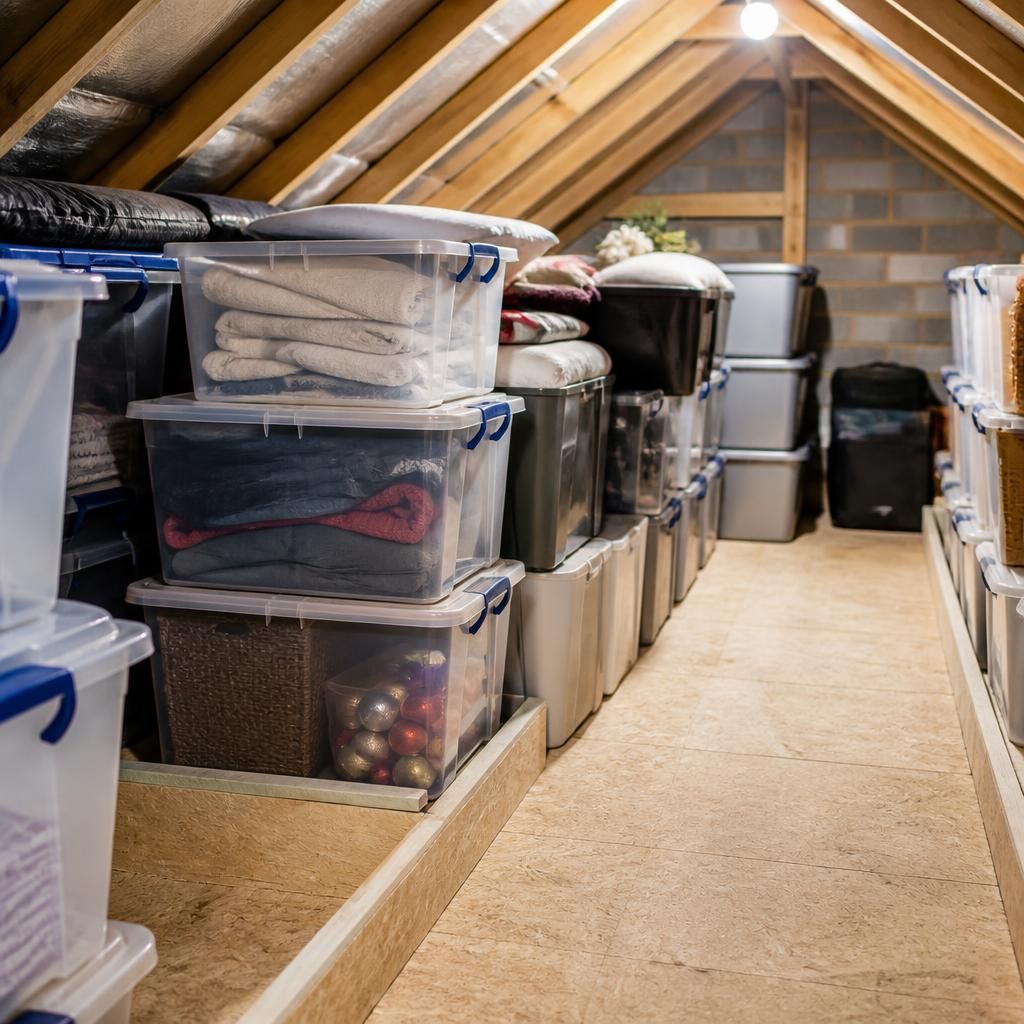
Airtight containers are not automatically the best choice for loft storage. If belongings contain residual moisture, a sealed tub can retain it and allow mould to develop.
Dry clothing, decorations and household items before packing them. Use lidded tubs for dust protection, but check the loft for leaks, condensation and damp before storing moisture-sensitive belongings for long periods.